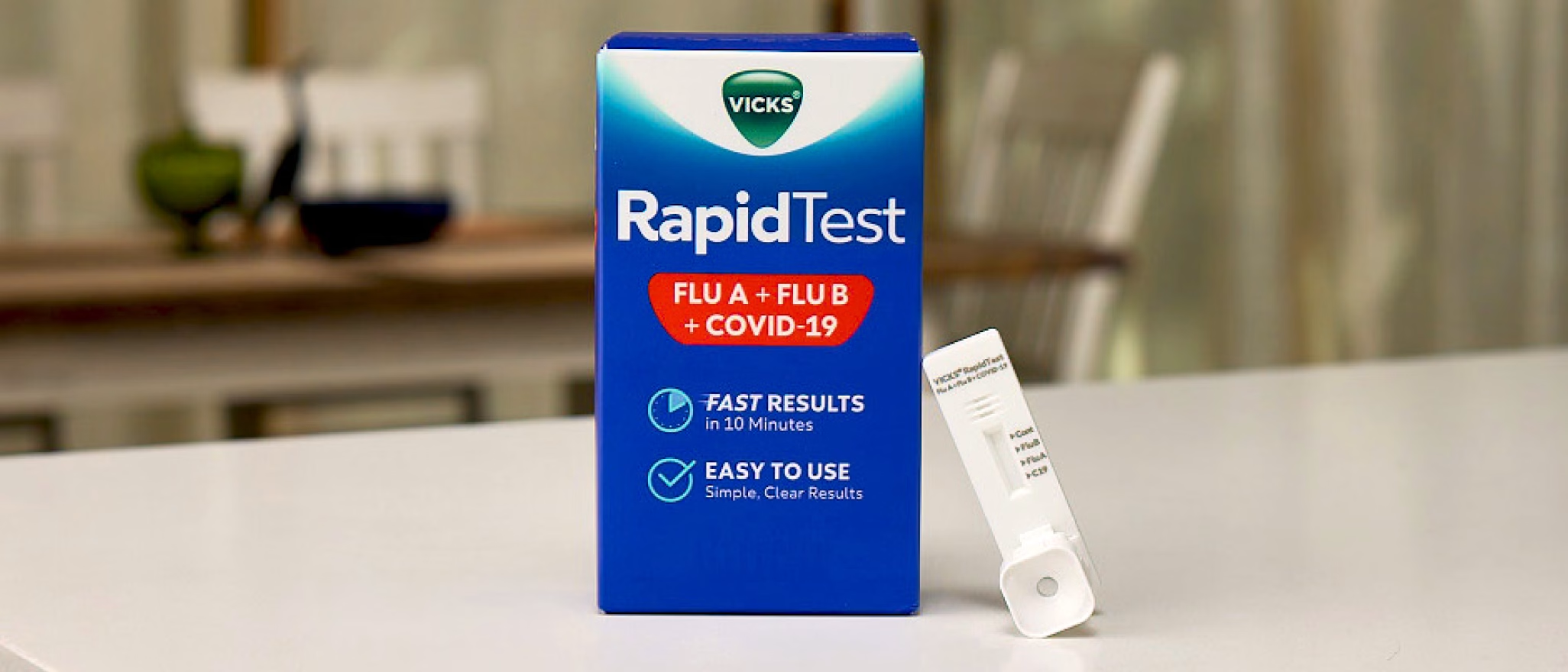
Flu and Covid Test

Can You Trust an At-Home Flu Test?

Key takeaway: At-home flu tests can provide useful information, but no test should be viewed in isolation. Understanding what results can and cannot tell you, following instructions carefully, and considering your symptoms alongside the result can help you use testing with greater confidence.

One of the most common questions people have about at-home testing is:

"Can I trust the result?"

That question is understandable.

Many people worry about:

  • getting a false negative;
  • seeing a faint line and not knowing what it means;
  • making a mistake during testing; or
  • relying on a result that turns out to be wrong.

The good news is that these concerns are common, and understanding how at-home tests work can help make results easier to interpret.

Why People Question Their Results

Testing can feel different from taking medicine or checking a symptom.

With testing, consumers are often looking for certainty:

"Do I have the flu or not?"

But respiratory illnesses are rarely that simple.

A test result is one important piece of information. Your symptoms, when symptoms began, possible exposures, and guidance from a healthcare professional may also matter.1

Understanding how to interpret results appropriately is often more useful than expecting a simple yes-or-no answer in every situation.

How Do At-Home Flu Tests Work?

At-home flu tests are designed to look for specific markers associated with infection.

The Vicks RapidTest FLU A + FLU B + COVID-19 Antigen Combo Home Test is designed to detect and differentiate Flu A, Flu B and COVID-19 antigens from an anterior nasal sample.2

You do not need to understand the scientific details behind antigen testing to use the test appropriately.

What matters most for consumers is:

  • following the instructions carefully;
  • collecting the sample as directed;
  • reading results within the proper time window; and
  • interpreting the lines according to the included instructions.2

Watch: Why Choose Vicks RapidTest

What Can a Positive Result Tell You?

A positive result means the test detected the relevant antigen in the sample.2

A positive result can provide useful information about what may be contributing to your symptoms and may help explain why you are feeling unwell.

However, a positive result does not tell you:

  • how severe your illness will become;
  • how long you will be sick;
  • whether another illness may also be present; or
  • exactly what you should do next.

Those decisions should be made based on your overall situation and, when appropriate, discussion with a healthcare professional.

What Can a Negative Result Tell You?

Many consumers assume a negative result means:

"I'm definitely fine."

That is not what a negative result means.

A negative result means the test did not detect the relevant antigen in the sample collected. Negative results do not completely rule out infection.2

This is why it is important to continue paying attention to your symptoms.

If symptoms continue, worsen, or create concern, follow up with a healthcare professional regardless of the test result.2

Does a Faint Line Count?

This is one of the most common questions consumers have.

Yes. Any colored test line should be considered positive when interpreted within the correct reading window, even if the line is faint.2

Many consumers assume a faint line means:

  • "not really positive,"
  • "barely positive," or
  • "I should ignore it."

The darkness of the line does not determine whether the result should be treated as positive.2

If you have difficulty seeing the result, review the instructions carefully and consult the approved result illustrations included with the test.2

Why Following Instructions Matters

One of the biggest contributors to confidence in testing is simply following the instructions exactly as provided.

Consumers sometimes worry that they performed the test incorrectly.

While no process can eliminate every concern, carefully following the instructions may help reduce avoidable mistakes.3

Pay particular attention to:

  • sample collection instructions;
  • timing instructions;
  • result-reading windows;
  • interpretation illustrations; and
  • steps for invalid results.

Always use the instructions included with your specific test kit.2

When Should You Follow Up With a Healthcare Professional?

Even when a result seems straightforward, there are situations where follow-up may be appropriate.

Consider contacting a healthcare professional if:

  • symptoms are severe;
  • symptoms are worsening;
  • you have questions about treatment options;
  • you are at increased risk of complications; or
  • your symptoms and result do not seem consistent.4

A healthcare professional can help determine whether additional testing, treatment, or follow-up care is appropriate.

How Can Vicks RapidTest Help?

The purpose of Vicks RapidTest is not to replace medical care. Its purpose is to provide information that may help consumers better understand what could be contributing to their symptoms.2

The test is intended for people with signs and symptoms of respiratory infection and detects Flu A, Flu B and COVID-19 antigens from one sample.2

When used according to the instructions, testing can provide information that symptoms alone often cannot. However, results should always be viewed as part of the broader picture that includes symptoms, timing, and healthcare guidance when appropriate.2

Related Reading

The Bottom Line

Trust in an at-home flu test should not come from assuming the result is perfect.

It comes from understanding what the test is designed to do, following the instructions carefully, and interpreting the result appropriately.

A positive result, a negative result, or even a faint line can provide useful information when viewed alongside your symptoms and overall situation.

The goal of testing is not to remove every uncertainty. It is to help you make more informed decisions about what to do next.

References

  1. Centers for Disease Control and Prevention. “Clinical Guidance for Outpatients With Acute Respiratory Illness at Higher Risk of Severe COVID-19 and/or Influenza.” Centers for Disease Control and Prevention, 19 Dec. 2025. View source. Accessed 4 Oct. 2026.

  2. Vicks. “Vicks RapidTest FLU A + FLU B + COVID-19 Antigen Combo Home Test Instructions for Use.” Vicks, n.d.. View source.

  3. U.S. Food and Drug Administration. “How You Can Get the Best Results With Home Use Tests.” U.S. Food and Drug Administration, 28 Dec. 2017. View source. Accessed 4 Oct. 2026.

  4. Centers for Disease Control and Prevention. “Treatment of Respiratory Viruses.” Centers for Disease Control and Prevention, 18 Aug. 2025. View source. Accessed 4 Oct. 2026.