Flu and Covid Test

Recovering From Flu or COVID-19: What to Do Next

Flu and COVID-19 can cause many of the same symptoms, but knowing what may be making you sick can help you decide what to do next.

If you feel sick:

  • stay home and away from others;
  • consider testing for flu and COVID-19;
  • contact a healthcare provider promptly if you may be at higher risk of severe illness;
  • rest, drink fluids, and manage your symptoms appropriately; and
  • monitor how you feel and seek help if symptoms become severe or concerning.

Can symptoms tell you whether it is flu or COVID-19?

Flu and COVID-19 are caused by different viruses, but both may cause symptoms such as:

  • fever or chills;
  • cough;
  • sore throat;
  • congestion or a runny nose;
  • fatigue;
  • headache; and
  • muscle or body aches.

Because many symptoms overlap, you cannot reliably tell the difference between flu and COVID-19 from symptoms alone.1

Consider testing early

Testing may help identify whether Flu A, Flu B, or COVID-19 is associated with your symptoms. That information may help you have a more informed conversation with a healthcare provider, particularly because some prescription treatments need to begin soon after symptoms start.

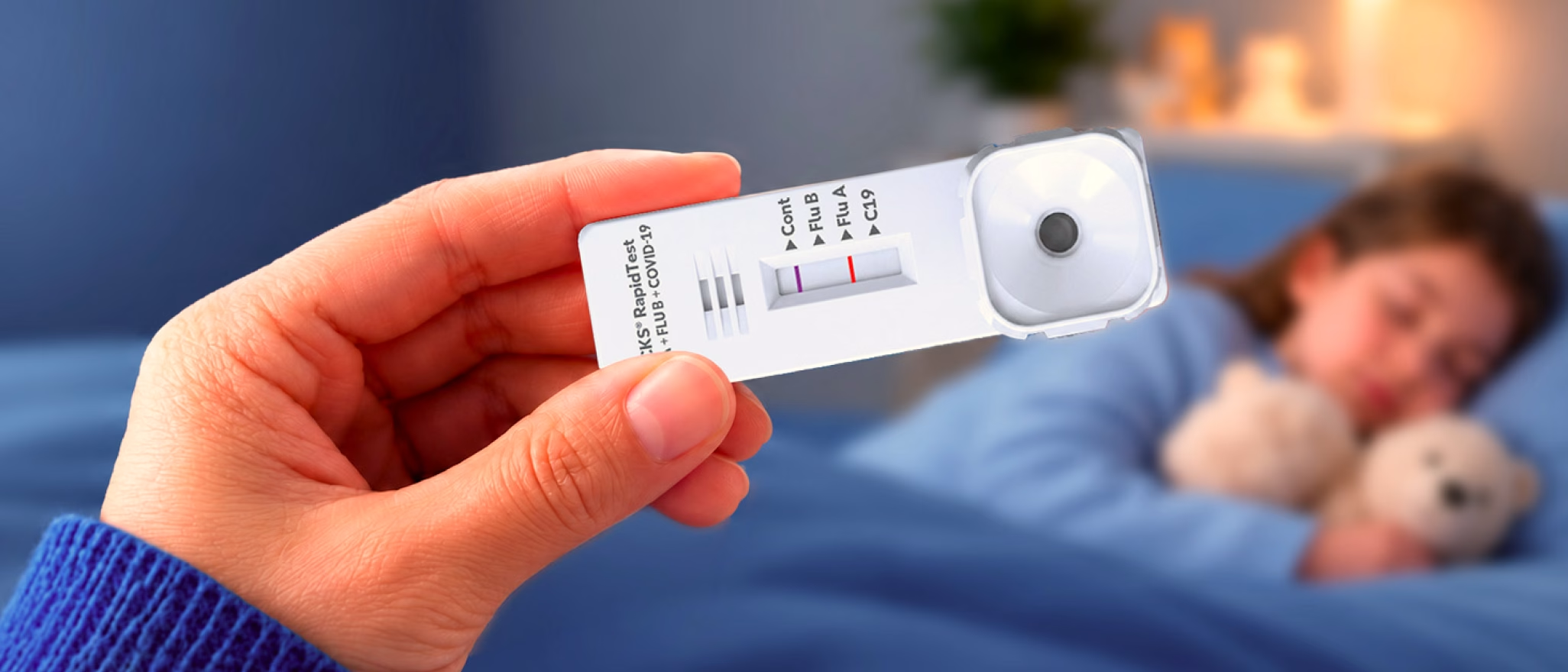
Vicks RapidTest FLU A + FLU B + COVID-19 Antigen Combo Home Test is an easy-to-use at-home flu and COVID test kit that checks for Flu A, Flu B and COVID-19 and delivers clear results in 10 minutes. It is designed to make testing at home straightforward, helping you get answers quickly so you can make more informed decisions about what to do next. People ages 14 and older may test themselves, and an adult may test a child age 2 or older. Always follow the instructions included with the test, including guidance about when to test and how to interpret your results.

Learn how to use Vicks RapidTest

A negative result does not completely rule out Flu A, Flu B, COVID-19, or another respiratory infection. If you test negative and your symptoms continue or get worse, contact a healthcare provider.2

Contact a healthcare provider promptly if you may be at higher risk

Prescription treatment may be available for some people with flu or COVID-19. These medicines are different from over-the-counter products that relieve symptoms.

Flu antiviral medicines work best when started within one to two days after symptoms begin. Starting later may still benefit some people, particularly those who are very sick, hospitalized, or at higher risk of flu complications.3

For eligible people with mild or moderate COVID-19 who are at higher risk of severe illness, treatment must begin as soon as possible and within five to seven days of symptom onset, depending on the medicine.4

Seek healthcare promptly for testing or treatment if you feel sick or test positive and have risk factors for severe illness. Do not wait for symptoms to become severe before asking whether treatment may be appropriate.5

Care for yourself while you recover

If you are caring for yourself at home, focus on rest, fluids, symptom relief, and monitoring how you feel.

Rest and avoid overexertion

Give yourself time to recover. Avoid strenuous activity when you feel unwell and return to your normal routine gradually as your symptoms improve.5

Drink fluids

Drink water or other fluids regularly. If drinking a large amount feels difficult, smaller amounts may be easier to manage.5

Manage the symptoms you have

Over-the-counter products may help relieve symptoms such as fever, aches, cough, sore throat, or congestion. They do not eliminate the underlying Flu A, Flu B, or COVID-19 infection.

Choose a product based on:

  • the symptoms you have;
  • the age of the person using it;
  • the active ingredients;
  • other medicines you take; and
  • the warnings and directions on the label.
Find Vicks relief based on your symptoms

A test result can help provide information about what may be making you sick. Your symptoms should guide which relief option you consider.

Several cold or flu-like symptoms

If you are experiencing a combination of symptoms, explore Vicks DayQuil daytime and Vicks NyQuil nighttime symptom-relief options.

Explore DayQuil and NyQuil

Nasal or sinus congestion

If congestion is your main concern, explore Vicks Sinex nasal and sinus relief options.

Explore Vicks Sinex

Sore throat

If you are experiencing a sore throat, explore Vicks VapoCOOL sore-throat relief options.

Explore Vicks VapoCOOL

Cough

If cough is keeping you uncomfortable, explore Vicks cough-relief options, including Vicks VapoRub.

Explore Vicks cough relief

Always read and follow the label. Use each product only for the symptoms it is labeled to treat. Vicks symptom-relief products do not replace prescription antiviral treatment or medical care when either is appropriate.

How long can recovery take?

Recovery is different for every person and depends on the illness, symptom severity, age, health conditions, and other factors.

Flu recovery

For most people, uncomplicated flu symptoms resolve within three to seven days. Cough and tiredness may continue for more than two weeks, particularly in older adults and people with chronic lung disease.6

COVID-19 recovery

There is no single COVID-19 recovery timeline. Symptoms range from mild to severe, and some people who initially have mild symptoms progress to more serious illness.1 Continue monitoring whether your symptoms are improving and whether new or concerning symptoms appear.

Contact a healthcare professional if your symptoms are not improving as expected, return after improving, or are causing concern.

When can you return to normal activities?

Current CDC guidance says to stay home and away from others while you have respiratory-virus symptoms that are not better explained by another cause.

You may return to normal activities after, for at least 24 hours:

  • your symptoms have been improving overall; and
  • you have not had a fever without using fever-reducing medicine.

For the following five days, CDC recommends added precautions such as cleaner air, good hygiene, a well-fitting mask, physical distancing, or testing when you will be around other people.7

If you develop a fever or begin feeling worse again, stay home and away from others. Follow the latest guidance from CDC and any instructions from your healthcare provider.

When should you seek emergency help?

Call 911 or seek emergency care if someone is experiencing a serious warning sign such as1:

  • trouble breathing;
  • persistent chest pain or pressure;
  • new confusion;
  • difficulty waking or staying awake; or
  • skin, lips, or nail beds that appear pale, gray, or blue, depending on skin tone.

This is not a complete list. Seek medical help for any symptom that is severe, concerning, or getting worse.

Your recovery checklist

When you are sick with possible flu or COVID-19:

  • Test: Consider testing because symptoms alone may not tell you which illness you have.
  • Act early: Contact a healthcare provider promptly if you may be at higher risk or want to ask about prescription treatment.
  • Find relief: Choose symptom-relief products based on your symptoms and follow every label.
  • Protect others: Stay home while sick and follow current respiratory-virus guidance.
  • Monitor: Pay attention to whether you are improving and seek help for severe, worsening, or concerning symptoms.

References

  1. Centers for Disease Control and Prevention. Symptoms of COVID-19. CDC, 10 Mar. 2025, View source. Accessed 4 Oct. 2026
  2. Vicks. “Vicks RapidTest FLU A + FLU B + COVID-19 Antigen Combo Home Test Instructions for Use.” Vicks, n.d.. View source.
  3. Centers for Disease Control and Prevention. Treating Flu with Antiviral Drugs. CDC, 26 June 2026, View source. Accessed 4 Oct. 2026
  4. Centers for Disease Control and Prevention. COVID-19 Treatment Clinical Care for Outpatients. CDC, 5 Feb. 2026, View source. Accessed 4 Oct. 2026
  5. Centers for Disease Control and Prevention. Treatment of Respiratory Viruses. CDC, 18 Aug. 2025, View source. Accessed 4 Oct. 2026
  6. Centers for Disease Control and Prevention. Clinical Signs and Symptoms of Influenza. CDC, 4 Feb. 2026, View source. Accessed 4 Oct. 2026
  7. Centers for Disease Control and Prevention. Preventing Spread of Respiratory Viruses When You're Sick. CDC, 18 Aug. 2025, View source. Accessed 4 Oct. 2026